

Good Wood
Why don’t they build half-timbered houses any more?

In the past year or so, my hometown paper has spilled many barrels of ink* on a compelling series about crumbling rowhouses in Philadelphia. About 50 of them collapse every year for a variety of reasons.
You might shrug and say, yo, these are 100-year-old homes. Maybe they’ve reached their expiration date.
But if you look around my adopted town, you’ll find plenty of houses that are five times that age - and they’re still standing strong. These fairy tale-like half-timbered beauties have withstood the ravages of time, not to mention Nazis.
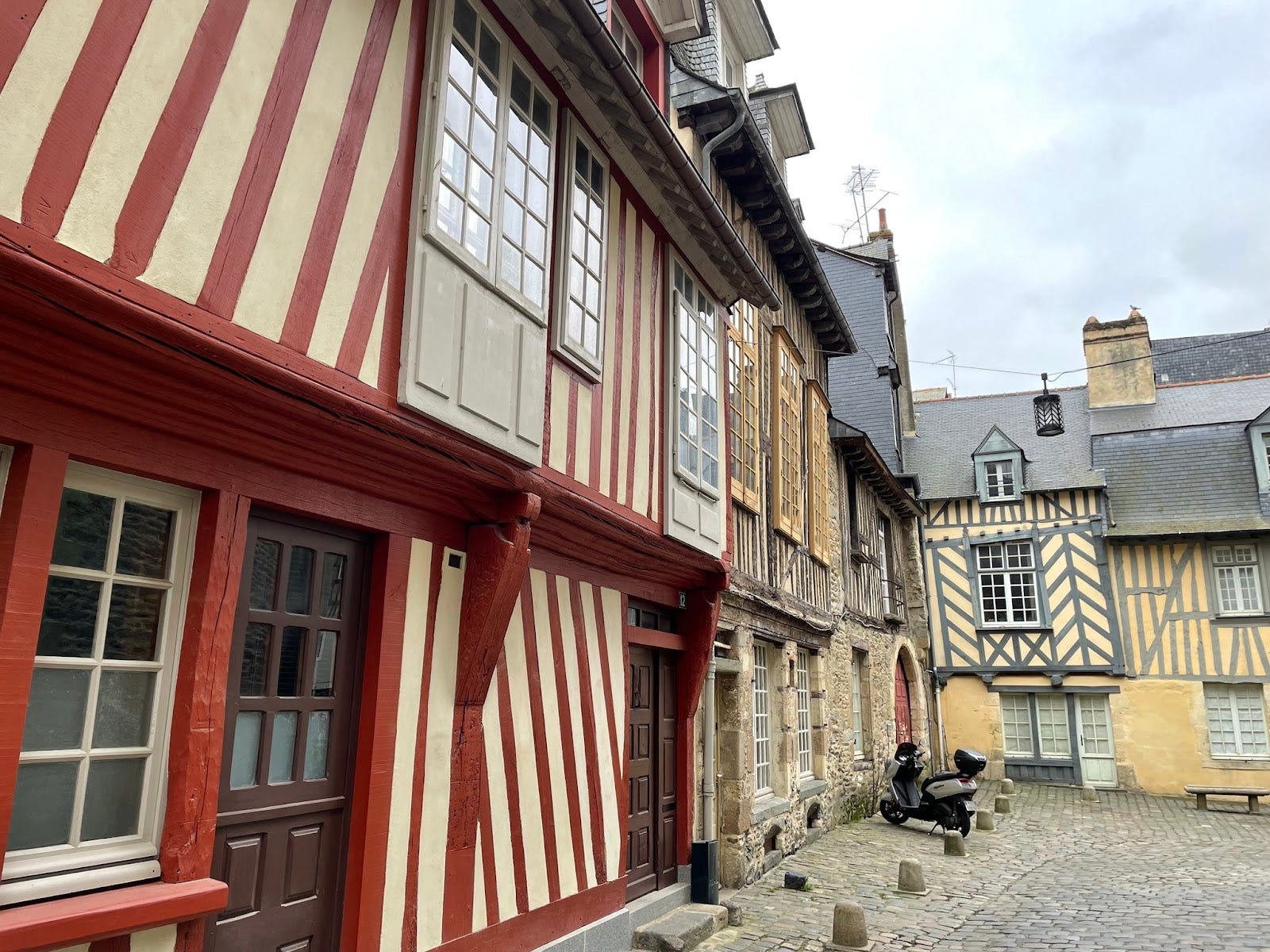
It makes you wonder: Why don’t they build half-timber-framed houses any more?
If you’ve ever visited Britain, Germany or France, you’ve probably seen these beauties. They’re a big part of Europe’s charm for many tourists. My former TV partner, Glen Macnow, quipped during a visit last year that Rennes’ entire Centre Ville looked like a movie set out of old Hollywood.
The style goes back to the fifth century, with development of the earliest cities in Europe. They built with whatever raw materials were nearby, namely forests which - after centuries of being used as a fuel source - had already begun to dwindle. Instead of assembling wall-to-wall wooden frames, craftsmen would split hardwood logs in half lengthwise – a half-timber – to form the structural skeleton of a building. They were joined by mortise and tenon or pegs. Then the gaps between the timbers were filled with bricks or plaster or even mud and twigs.
The ancient engineering behind their design is remarkable. The diagonal beams interlock to share the load, while their familiar overhangs create compression to keep everything in one piece. (No, I’m not a structural engineer – but my dad was, and he taught me a thing or two about how buildings remain standing.)
Indeed, it's the very nature of half-timber construction that prevents them from falling apart. Unlike stiff nail plates used in modern construction, the age-old joinery of a typical half-timbered house allows them to absorb movement in the truss without cracking. I doubt the set of houses below would pass the BOCA code, but they’re still standing, dammit!
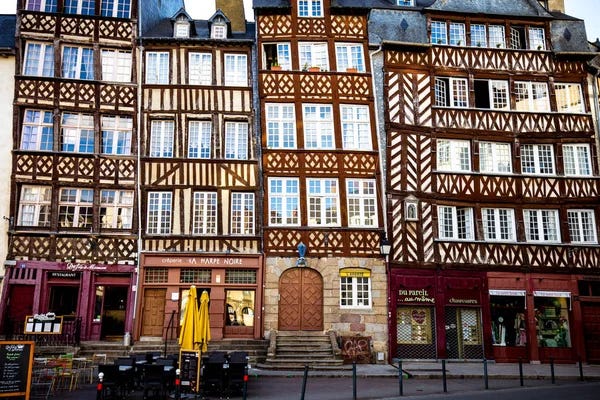
The square above is one of Rennes’ most popular attractions. At any time of the day, you’ll see tourists (and locals) taking photos of these wonderfully leaning buildings, and the local tourism bureau makes a big deal of them. Truly, they’re a thing of beauty, especially compared to those god awful apartment boxes they’ve been erecting along Philly’s Ridge Avenue. You know, the ones that will be collapsing into a pile of rotted 2x4s before the end of this century.
Sure, half-timbered designs look old-fashioned. But in Rennes, they’re perfectly usable as boutiques, restaurants, offices and housing. The city’s oldest structure, built in 1505, is now a nightclub.
Obviously, there are reasons modern Downtown USA doesn’t look like a 14th-century Saxon village. Fire, for starters. Rennes’ lost nearly half of its buildings during a six-day blaze in 1720 that spread easily because of all that exposed wood. American cities, built with the fresh memory of great European infernos, typically made use of fireproof brick and stone.
There’s also the decline in woodworking knowledge. As someone who rehabbed two houses but could nonetheless easily spend a weekend struggling - and failing - to fashion a hand-carved dovetail joint, I assure you that fitting all those complex, angled joints is an art. Norm Abram notwithstanding, not many home builders know how to do it any more, and besides, it’s a lot easier - and cheaper - to use a nail gun.
They’re also difficult to maintain, with their steeply pitched slate roofs and creaking floors. After centuries of shifting and settlement, there’s not a square corner to be found. Their builders didn’t envision kitchens with Thermador ranges and 600-pound granite countertops. And pity the poor plumber who has to patch a leak behind eight inches of masonry.
There are other issues, including the limited supply of broad timbers and homeowners’ demand for lots of windows.
Yet, their durability should be a selling point - especially in light of Philadelphia’s shameful number of rowhouse collapses.
Well into the 20th century, Rennes had more than 1,000 half-timbered houses that had been inhabited for centuries. Generations of families handed them down from the age of Duchess Anne of Brittany to the reign of Louis XIV to Napoleon. It took a world war, with its aerial bombardment by both the Luftwaffe and the RAF, to bring them down. Afterwards, hundreds more were demolished in a desire to modernize the city.
Today, there are around 400 half-timbered houses still standing here. Despite their longevity, though, even Rennes isn’t rebuilding these quirky structures. Those that disappeared were at first replaced by boring-looking masonry buildings which, frankly, have not aged very well. The late Czech writer Milan Kundera, who was exiled here in the 1970s, called Rennes the “ugliest” city he’d seen.
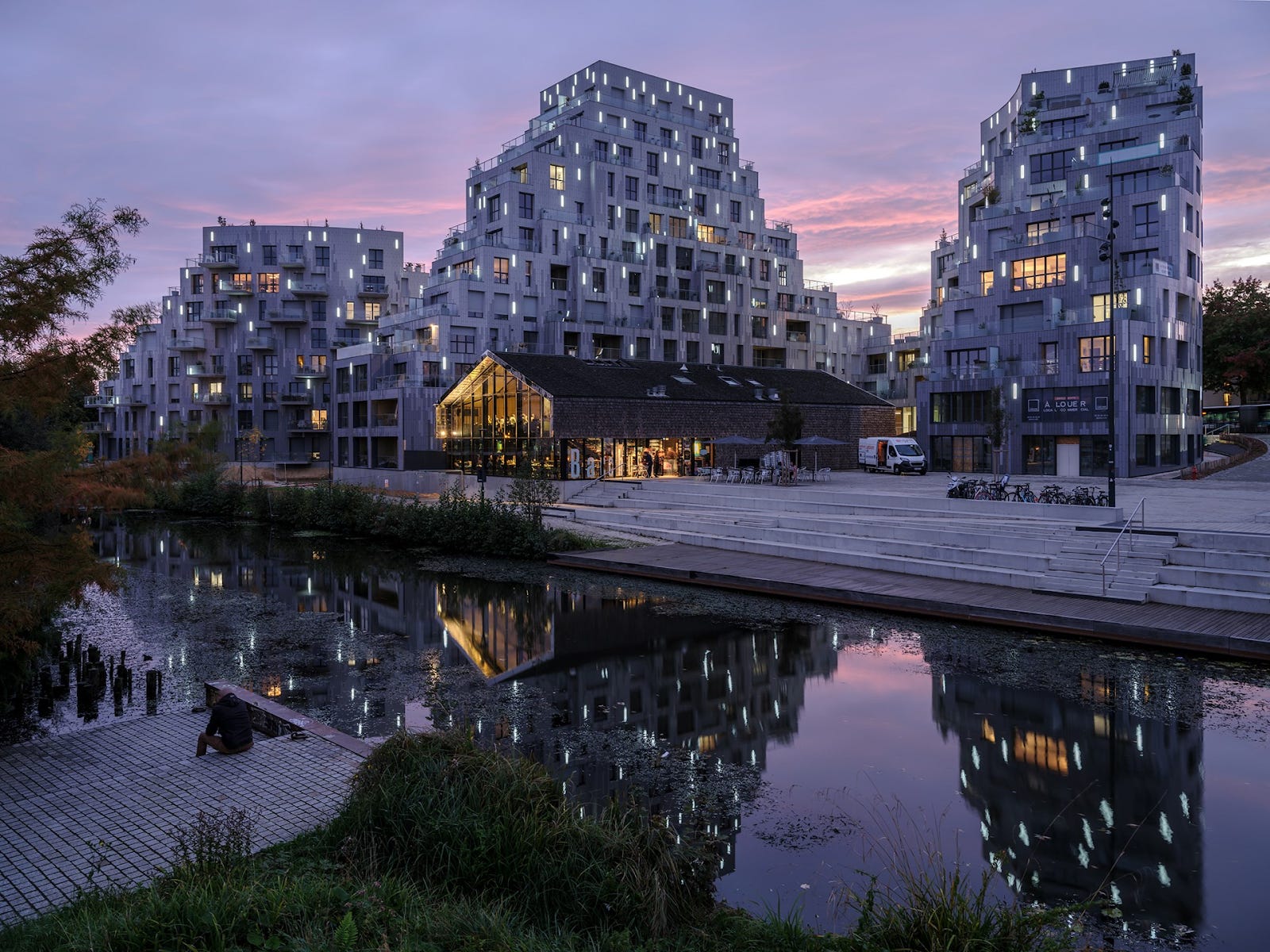
In the last 10 years, however, Rennes has turned things around, adding an astounding variety of super-modern eclectic designs, including the Ascension Paysagère where we now live. Will it last as long as a 16th-century half-timbered house? Maybe not, but the walls are a solid 10 inches of cement. No crappy 2x4s for us!
*It occurs to me, in this digital age, this is an outdated idiom that many readers will not recognize. Especially as my former employer’s print version dangles just above 50,000 (about 1/16th that of Rennes’ main newspaper).
Reading Paved Paradise by Henry Grabar now and, well, parking demands in US cities make for some ugly, stupid housing (not to blame for 4 story buildings made of plywood going up in Germantown tho - that's just plain dumb). Doubt Rennes has "minimum parking" requirements for new construction.
Love this article, and these beautiful old buildings! My dad's family were builders, and he, his brother and their father were adept at making dovetail joints, among other things. I have some beautiful furniture my father and grandfather made, real treasures. Thank you for explaining the structural principles behind half-timbered construction!