

Routine Matters
Slowly, daily life is becoming second nature

At first I kept trying to flip the bathroom light switch instead of pushing it. It sent me off balance, like when you think you’re about to pick up a full stoneware cup but it turns out to be an empty plastic one. It didn’t take more than a couple weeks before I got so used to French rocker-style switches that I barely remembered the toggle light switches I had used my entire life.
Same with the doorknobs. And military time. And the toilet flusher.
You don’t realize it’s happening because adaptation sneaks up on you, one flush at a time. How much I had become acclimated to everyday life in France didn’t strike me until my last visit to the US, when I walked into a CVS and searched out a clerk just to say hello. Totally normal in France but – according to the look on this lady’s face – suspect in Philly.
This got us thinking about all the French things that seemed so odd at first that have become second nature to us. Like . . .
Being polite
It’s not just saying thank you and holding the door for the person behind you. My parents taught me that stuff. In France, there’s more. Much more. There’s offering the famous bonjour before you say anything else–and I mean anything, including, “I need an ambulance.” There’s also merci, au revoir, bonne journée, and lots and lots of pardons and excusez-moi de vous déranger.
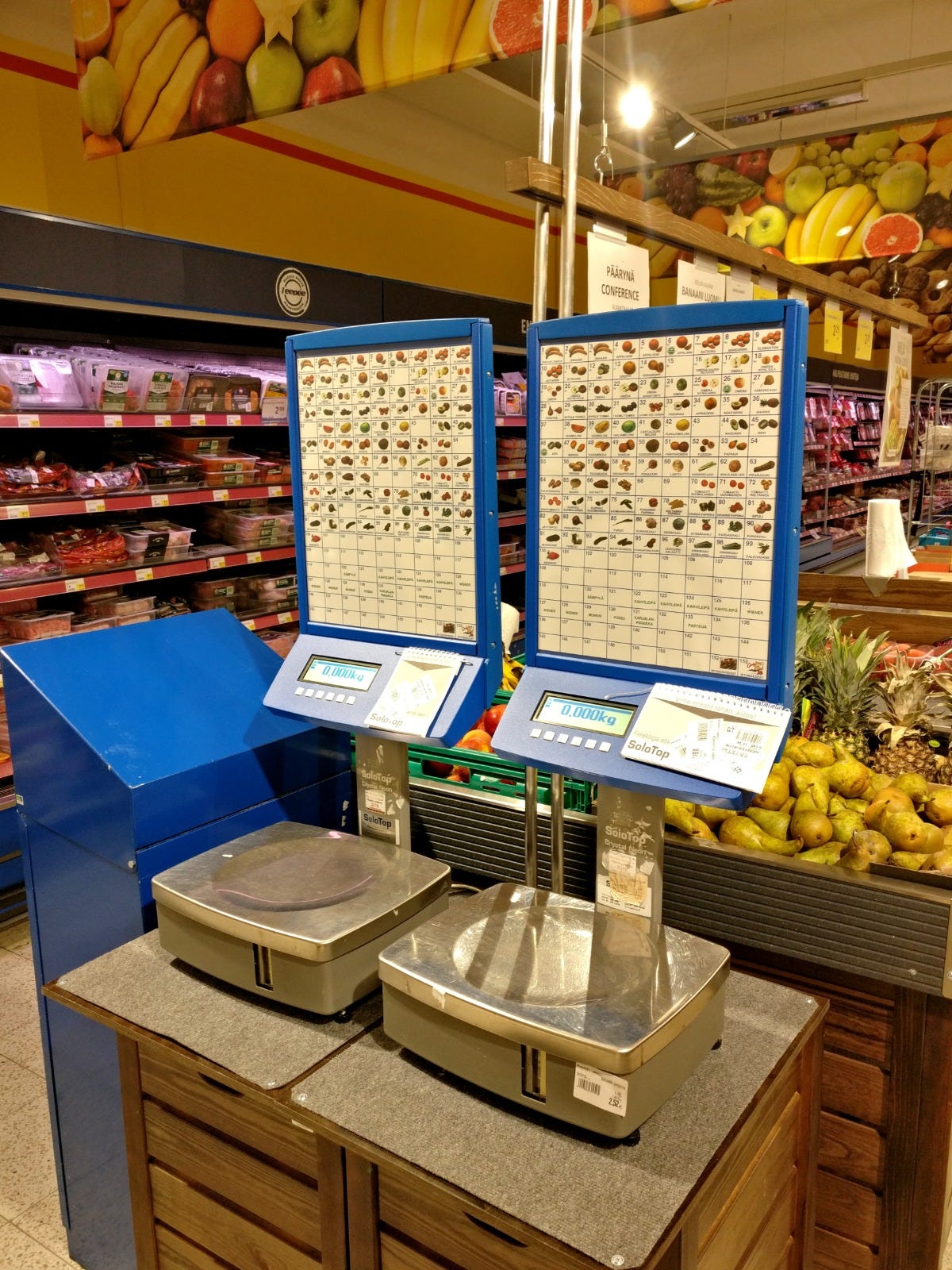
Weighing produce in the supermarket
You learn this one the hard way. There you are, deep into checking out your order when the cashier grabs the paper bag with four loose apples. She can’t ring it up because you didn’t know you had to put that bag on a scale, weigh it, then slap a price sticker on the bag. It’s customary. Unless it’s not: Some food markets weigh the thing at the cashier’s booth. (Pro tip: If you don’t see a scale but you’re still unsure, pretend to carefully inspect the oranges until you see what someone else does with their fruit. Then do that. This tactic avoids being forced to make the produce walk of shame.)
How to write your our name
On forms, your name (nom) is your last name. Your first name is your prénom, so I write Conroy, Theresa. We won’t even discuss how I have to pronounce my name here (but it’s become second nature, too).
Not using credit cards
The type of credit cards we had in the US don’t really exist here in France. Most people use cash or a bank card, which is a debit card we call a Carte Bleu or CB (carte bancaire). These days stores and restaurants easily accept traditional US-style credit cards, but their personal philosophy about them is more aligned with the buy-what-you-can-afford mindset than the one that screams, Charge It!
How to navigate a French outdoor market
There are many rules, traditions, customs and booby traps. I’ve passed on some of what I’ve learned here, but I’m still on alert. While I am much more comfortable cruising the market these days, staying on the good side of a fruit vendor takes constant vigilance.
How to pay a restaurant bill
Duolingo may teach you to ask the server for l’addition, s’il vous plait, but that’s not so common these days. Unless you are in a super fancy place, you’ll walk up to the cash register and pay right there. Sometimes you’ll give them a table number or your main course and they’ll find your check. It’s a great improvement over the days of paying at the table because large parties splitting the bill can each pay for exactly what they consumed.
No one-stop shopping
You could get everything at my Philly ShopRite: meat, fish, fruit, veggies, bread, pantyhose, Tylenol, ant traps, birthday cards, plastic forks, lipstick, suntan lotion and dog food. CVS was just about as good, except with more emphasis on snacks and beach umbrellas. Hypermarchés in France are similarly stocked, but they’re usually located on the outskirts of town. In cities like Rennes, you trek to several stores if your shopping list includes bread, fruit and ant traps. So you grab your rolly cart and head to the boulangerie, grocery store, pharmacy and hardware store. It’s a bit more work but a lot more fun.
The foldable shopping bag
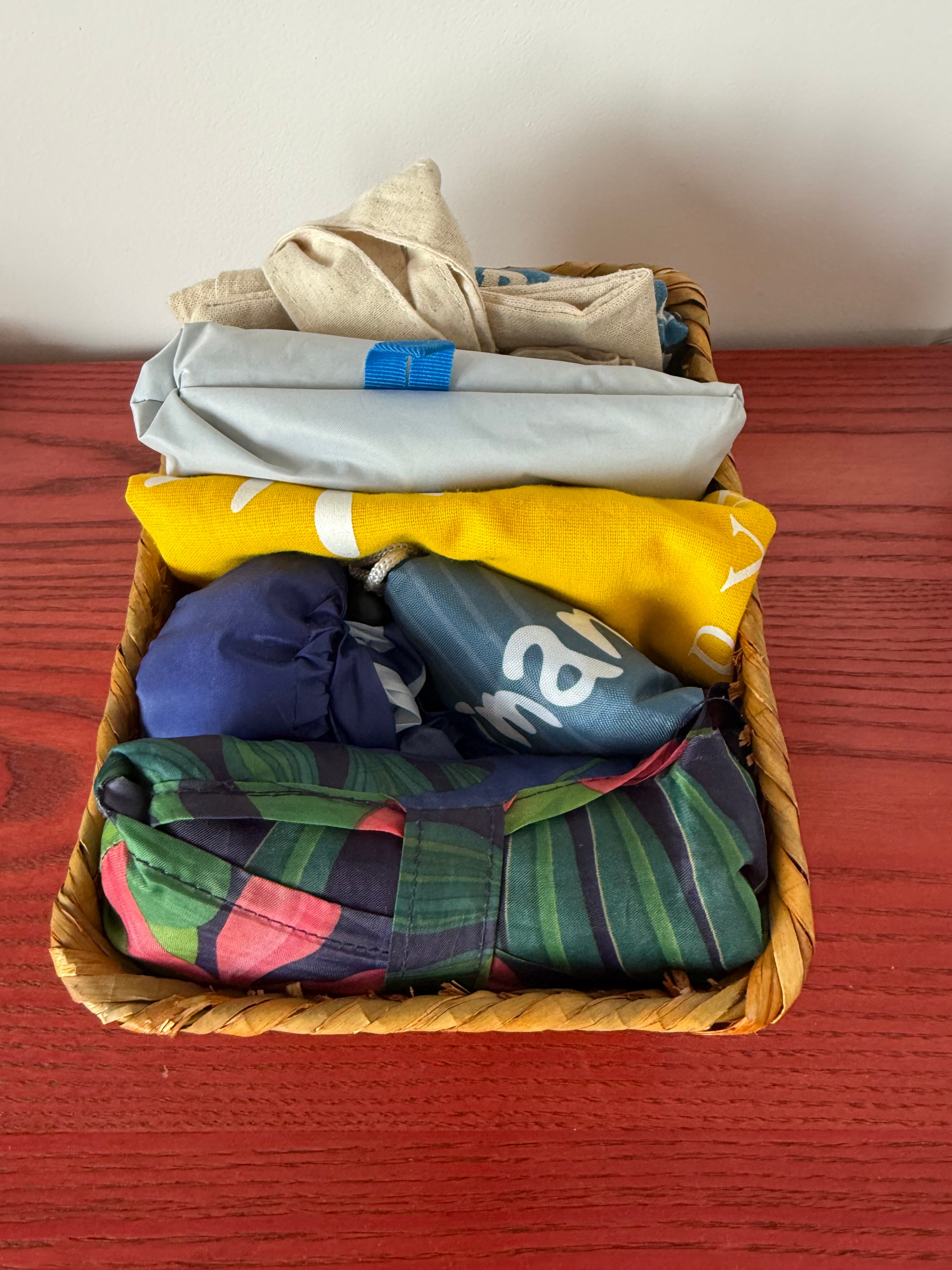
You never know when shopping may happen. Not all stores have bags. Those that do often charge for them. It’s a nominal cost but heavy on the environmental guilt. Instead, adopt my motto (Always Be Prepared To Shop!) and carry your own bag every time you leave the house.
Counting stuff the French Way
The first floor, or rez-de-chaussée is zero. The next floor up is the first floor. We live on the sixth floor in France, which is the seventh floor in the US.
Dates are expressed in this order: day/month/year. Christmas this year is 25/12/26.
The use of military time in Europe means that, unfortunately, you have to do math. 10:30 p.m. plus 12:00 is 22:30. (See, you do get used to it. I did the math in my head, like a 6th-grader!)
When you recite digits, like a door code or telephone number, you must group the digits in pairs. If the code is 2652, you say “vingt-six, cinquante deux,” not “two, six, five, two.”
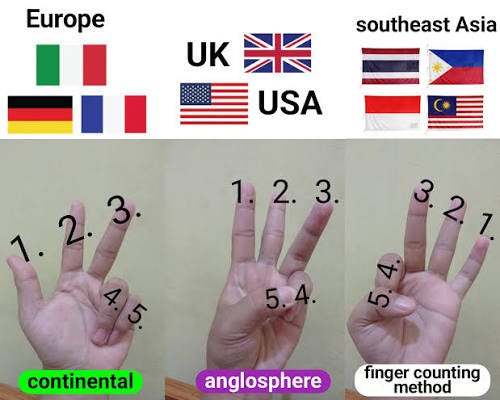
When you use your fingers to show how many peaches you want, the thumb represents number 1. If you start with the index finger they may assume you want five peaches. That wouldn’t be the worst thing because the peaches are delivered here daily from a grove of peach trees in heaven, but still.
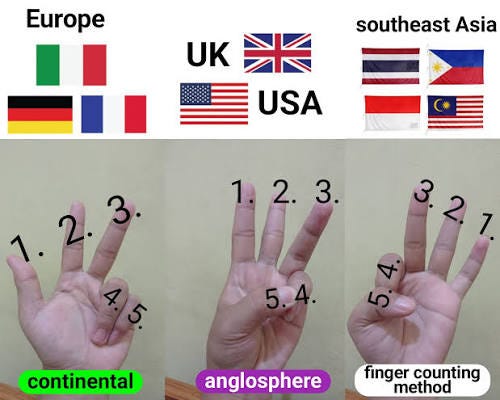
Finger counting across the globe.
It’s not all second nature. Here’s what we’re still working on . . .
How to write a check without Googling the instructions.
Knowing what the numbers on the thermometer or bathroom scale mean without translating them into English.
Quickly identifying spam calls.
Sorting and counting coins in my change purse.
Finding a decent French beer.
16 C is 61 F. 28 C is 82 F . 22 C is Costa Rica weather, 72 F.
I have Rick Steves to thank for that mental crutch.
What a fun article! Where in France do you live? Greetings from a Philly. native living in Paris 20+ years.